
Idioms about: Performance

Life is a stage. Explore idioms in the spotlight.

Showing 11-20 of 20

Generated image of the Pied Piper of Hamelin

Pay the piper

To pay the piper means to face the consequences of something you have done. This idiom is used when a person must finally deal with the results of their actions, especially after avoiding them for a while.

The expression may come from the old story of the Pied Piper of Hamelin, a story where a town refused to pay a musician for his work taking the rats away. Because they did not pay him, the piper took revenge by leading the town's children away.

After ignoring his debts for months, he finally had to pay the piper.

Photo of a man playing the piano

Play It by ear

The phrase play it by ear means to decide what to do as things happen; there is no fixed plan ahead of time. This idiom comes from some people's ability to play a song on a musical instrument from what they have heard, without the sheet music or practising.

Let's play it by ear and see how the day goes.

Generated image of two fiddle players

Playing second fiddle

Playing second fiddle means having a less important role than someone else. It describes a situation where another person is the leader or gets most of the attention, and you must accept being in a supporting position.

In an orchestra, the first violin leads the section while the second violin supports it. The second player is still important but does not lead.

At work he feels like he is always playing second fiddle to his more confident colleague.

Photo of a choir

Preaching to the choir

Preaching to the choir or the older form preaching to the converted means explaining something to people who already agree with you.

The phrase comes from church services. The choir stands with the minister and already shares the same beliefs.

You are preaching to the choir when you talk to this group about protecting the environment.

Generated image of a pipe organ

Pull out all the stops

To pull out all the stops means making the greatest possible effort and using every available resource.

The idiom comes from how pipe organs work. Stops control which sets of pipes are used. When all the stops are pulled out, the instrument produces its fullest and loudest sound.

The team pulled out all the stops to finish the project before the deadline.

Photo of a church bell

Ring a bell

If something rings a bell it means it reminds someone of something they have heard before, but they cannot fully remember it.

The expression comes from the sound of a bell that attracts attention and triggers recognition. Hearing the bell is like the moment when a memory starts to return.

That name rings a bell, but I cannot remember where I heard it before.

Generated image of a man stealing the show

Stole the show

Stole the show means drawing the most attention and praise during a performance or event. One person stands out more than everyone else.

The phrase comes from theater. An actor who receives the strongest reaction from the audience can seem to take the spotlight away from the rest of the cast.

The small puppy wandered into the office and stole the show.

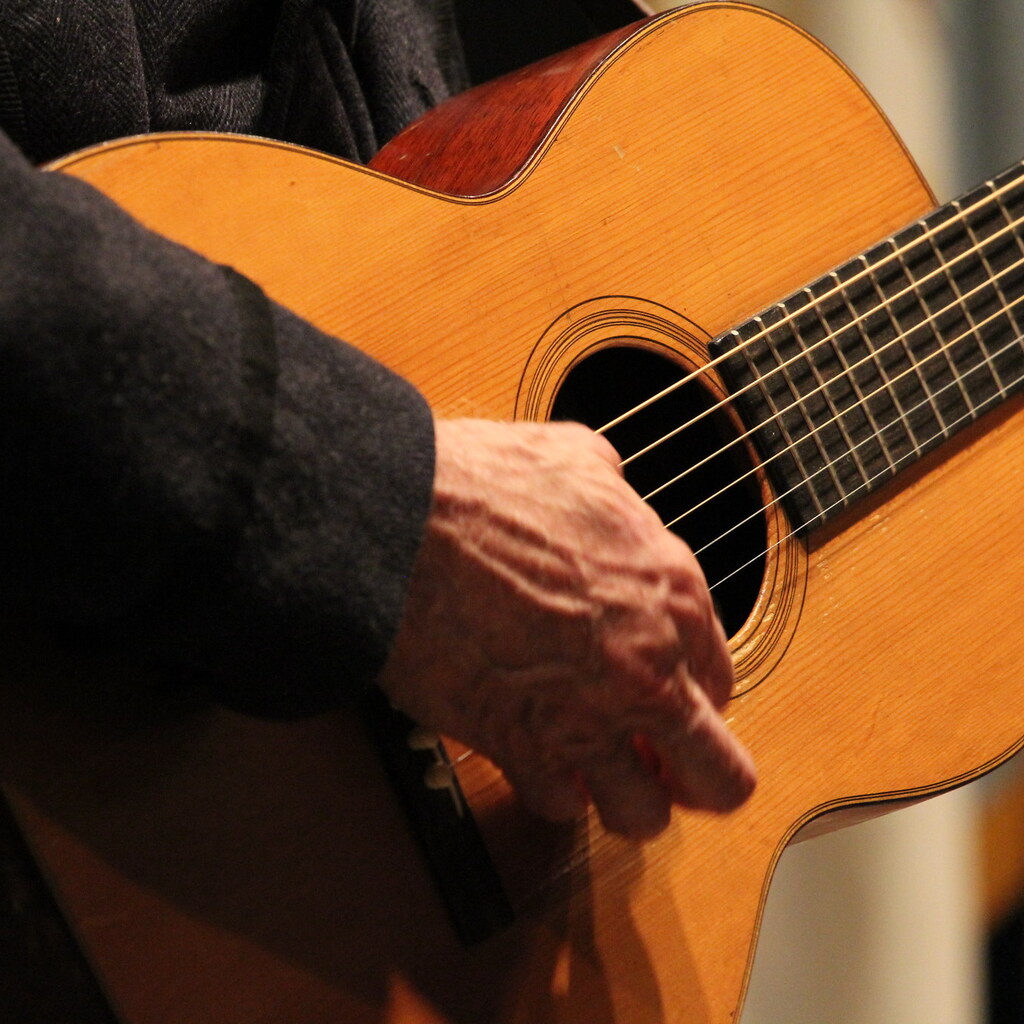
Photo of someone strumming a guitar

Strike a chord

If something strikes a chord it means that it causes a strong emotional reaction or feels meaningful to someone. This idiom often describes an idea, comment, or story that people connect with deeply.

The phrase comes from music, where striking a chord means playing several notes together on an instrument. The image later became a metaphor for something that resonates emotionally with a listener.

Her speech about helping the community struck a chord with many people in the audience.
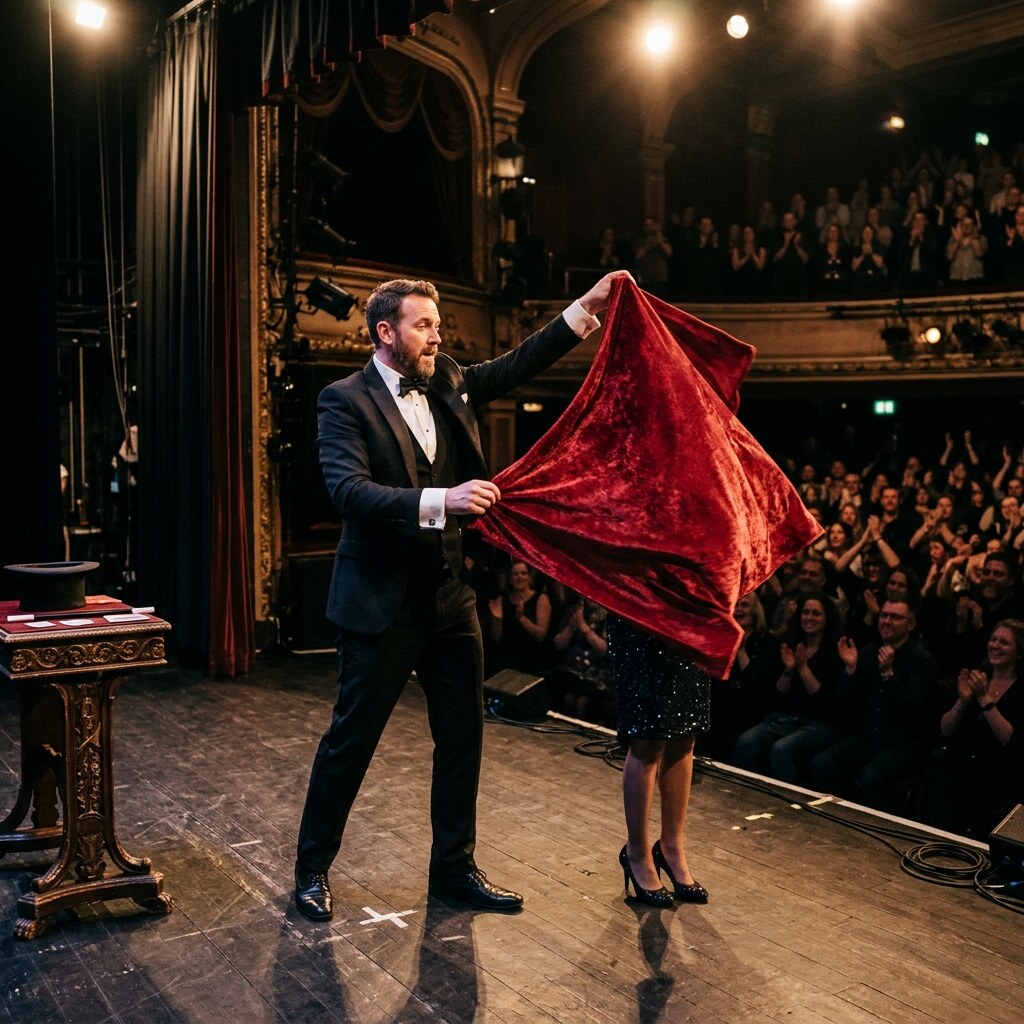
Generated image of a magician doing vanishing tricks

Vanish into thin air

The phrase vanish into thin air means disappearing suddenly without leaving a trace.

The keys seemed to vanish into thin air.
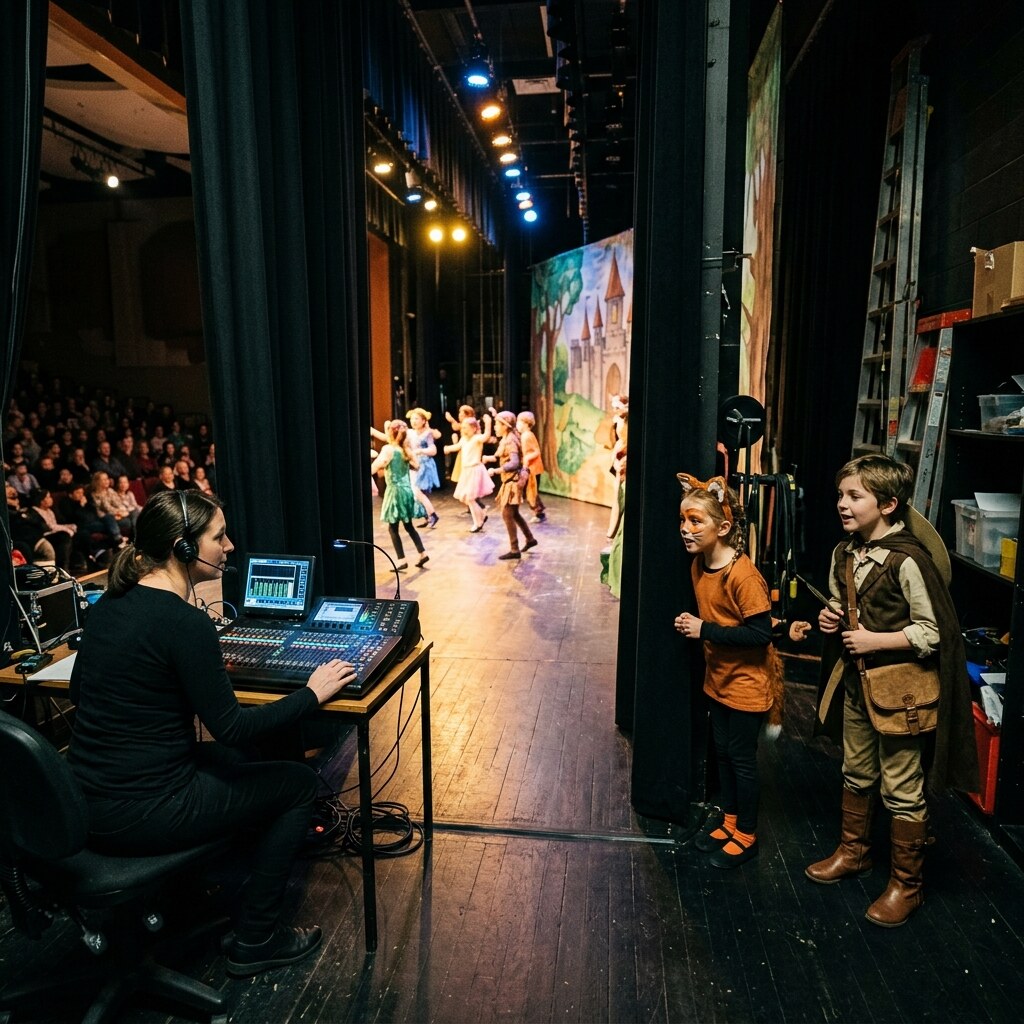
Generated image of children waiting in the wings of a theatre

Waiting in the wings

Waiting in the wings means being ready to step in when the right moment arrives. A person may stay nearby while someone else is still in the main role.

The phrase comes from theater. The wings are the side areas of a stage where actors stand out of view before making their entrance.

A new candidate was already waiting in the wings if the manager decided to leave.